
A Life-Giving Alternative to Religious-Right Religion
Martin Thielen
April 7, 2026
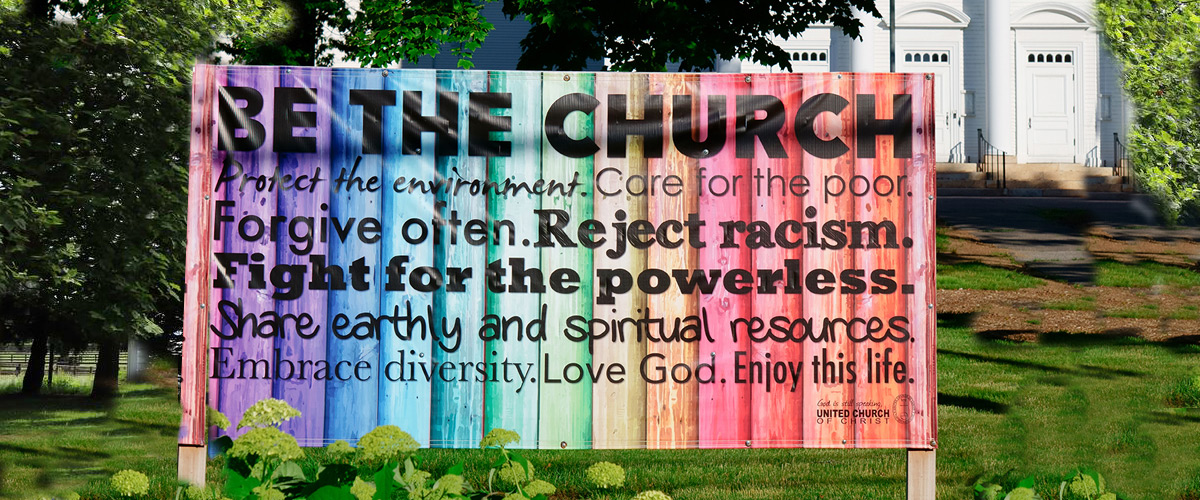
“The Christianity prevalent in so much of America right now isn’t just failing to draw others to Christ; it is actively repelling them from him. By operating in a way that is in full opposition to the life and ministry of Jesus, that counterfeit religion is understandably producing people fully opposed to the faith that bears his name.”
John Pavlovitz
NOTE: This article is the second in a three-part series on progressive Christianity. The first was It’s Hard to Find a Progressive Church (and Getting Harder). The third will be posted next month and will include reader’s comments about progressive faith.
A reader recently emailed me, “If I had to choose between religious-right Christianity or atheism, I would have to choose atheism.”
This reader hasn’t lost faith in Jesus. But he’s deeply troubled that American religion (at least a large segment of it) has, in his words, “been hijacked by a twisted distortion of Christianity.” For him, this twisted version of faith is worse than no faith at all. As he explained, “The values of secular humanism are far closer to the spirit of Jesus than religious-right Christianity.”
Although you may disagree with this person, he makes a valid point. For millions of people in the United States, the word Christian evokes images of antigay, anti-immigrant, anti-science, anti-Muslim, anti-women, anti-intellectual, angry, fearful, intolerant, negative, judgmental, narrow-minded, mean-spirited, nationalistic, and partisan religion that contradicts the example and teachings of Jesus. Given that reality, it’s no wonder that huge numbers of people have chosen no religion over religious-right religion.
I’ve thought a lot about that email correspondence. On the one hand, this reader overstated his argument. He painted with too broad a brush. Not all religious-right believers fit his “twisted distortion of Christianity” description. I know plenty who don’t. On the other hand, many of them do fit his description, especially among evangelicals and the politicians who manipulate them for political gain. Given that reality, I understand his argument that having no religion is better than having bad religion.
Benefits of Progressive Christianity
Thankfully, we don’t have to choose between religious-right religion and no religion at all. There is an alternative. It’s called progressive Christianity. And we need it now more than ever. Numerous benefits of this kind of faith follow.
- Progressive Christianity emphasizes grace over judgment.
- Progressive Christianity is committed to social justice.
- Progressive Christianity values reason and science.
- Progressive Christianity prioritizes Christian living over doctrinal conformity.
- Progressive Christianity affirms divine mystery and ambiguity.
- Progressive Christianity welcomes questions and doubts.
- Progressive Christianity practices inclusion rather than exclusion.
- Progressive Christianity affirms and values the LBGTQ community.
- Progressive Christianity believes in women’s equality.
- Progressive Christianity respects other religions.
- Progressive Christianity celebrates theological diversity.
- Progressive Christianity gives people permission to harbor nontraditional beliefs.
- Progressive Christianity seeks to follow the example and teachings of Jesus.
- Progressive Christianity majors on living a life of love.
Minority View
Other than a pastoral stint in Hawaii, I spent my entire ministerial career in the South. In that setting, the predominant religious culture was conservative evangelicalism. I made no effort to compete with that tradition. If people wanted a religious-right version of Christianity, they would not be happy with me or my church. Instead, my congregation and I attempted to offer our community an alternative to fundamentalism. For example, I once published a column in my local paper laying out the core characteristics of progressive Christianity. The brief column, called “Minority View,” follows:
The majority religious worldview in our community is, by far, conservative evangelicalism, often called “the religious right.” However, other religious perspectives also exist in our community, including “progressive Christianity.” Although it represents a minority view in our area, progressive Christianity offers spiritual direction and meaning to a lot of people, including me. So, in today’s column, I’d like to tell you a little bit about this group.
Progressive Christians are perfectly comfortable holding faith and science in harmony. For example, they believe God created the world but did so through the process of evolution. Rather than being in conflict, they argue that faith and science can peacefully coexist.
Progressive Christians are more interested in right living than right beliefs. For example, Jesus’s “Great Commandment” (to love God and neighbor) and his “Golden Rule” (to treat others the way you want them to treat you) are more important to them than the fine details of human-made doctrines and creeds.
Although progressive Christians take the Bible seriously, they don’t always take it literally. For them, affirming “biblical inerrancy” would require impossible beliefs including God’s support of slavery, genocide, and oppression of women. Like most Christians throughout most of church history, when progressive Christians do theology, they turn to Scripture—but also to reason, tradition, and experience.
Progressive Christians affirm full inclusion of LGBTQ people into the church. They point out that while the Bible says little about homosexuality (Jesus never mentions it), Scripture says much about love, grace, kindness, inclusion, and justice. They also note that the Bible was written during a time when people had no concept of sexual orientation or gender identity.
Progressive Christians care deeply about social issues. For example, they advocate full equality for women at home, work, and church—including the right to serve as clergy. In the spirit of Jesus the healer, they seek to expand health care to as many people as possible. They think America should treat immigrants compassionately, as Scripture clearly teaches. They believe racism is deeply embedded in society and that Christians should do everything in our power to eradicate it. And they acknowledge the destructive reality of human-made climate change and seek to mitigate its worst consequences.
Progressive Christians also believe strongly in the separation of church and state. Therefore, it deeply concerns them when churches engage in partisan politics and support specific political candidates (from either party) in the name of God.
Much more could be said. But in short, progressive Christians understand faith differently from most conservative evangelicals. Obviously, progressive Christianity will never be the majority view in our deeply conservative Southern community. But their minority views have merit and should be understood and considered by all people of good will.
You can certainly disagree with progressive Christianity. Most religious residents of our community do. But you don’t need to be afraid of them or feel anger toward them. Like you, they love their country and community. And, like you, they are trying their best to follow the spirit, example, and teachings of Jesus Christ.
The Need for Progressive communities of Faith
In today’s religious environment of mostly conservative churches, progressive congregations have a unique opportunity to offer a viable alternative to religious-right fundamentalism. In short, they can tell a better story. And, as noted above, progressive Christians and churches have a very good story to tell. (A few resources to help you do so can be found at the bottom of this article).
Although they are in the minority, plenty of people today yearn for a positive, open-minded, open-hearted, inclusive, progressive, life-enriching community of faith. As one Doubter’s Parish reader wrote, “I’m sure there are wonderful churches out there—churches where love is the main thing, where belief in doctrine isn’t the main thing, and where following Christ is the mission. But they are not easy to find.” If progressive churches will provide that kind of faith community, however imperfectly, a good number of people will be attracted to them.
Notes From a Prodigal Daughter
I had just about finished this article when I watched a Netflix comedy special by Taylor Tomlinson called “Prodigal Daughter.” Tomlinson grew up in a religious-right denomination—what she calls “scary church.”
In her twenties, Taylor left faith and church and became a fierce critic of religion in her comedy routines. However, she’s moderated that stance somewhat. She now expresses some gratitude for her religious heritage, including the fact that she got her start in standup comedy as a Christian comedian. She said it taught her important lessons about her profession.
Tomlinson’s Netflix special has funny moments, especially when she talks about religion. But it also has a lot of raunchy content, and I don’t especially recommend the show. However, during her “Prodigal Daughter” presentation, Taylor shared some significant reflections about religion that I’d like to share with you. Her comments felt like an appropriate ending for this article. Near the end of her comedy set, she said:
“Religion can be used as either a weapon or a tool. And to be clear, if you are using religion as a weapon to control, manipulate, scare people, and make yourself feel superior to everyone else, f*** you. That’s not what it’s for.”
“If God does exist, he does not exist to make you feel better than other people. He exists to make you better for other people.” Then she added, “There are a lot of people who are using religion correctly . . . people who are using it as a tool for community and connection and compassion and comfort.”
And that kind of religion—the kind that makes you better for other people—that’s the kind of religion “Prodigal Daughter” Tomlinson recommends and affirms.
Taylor Tomlinson is no longer a Christian. And she’s certainly not a theologian. But she understands the difference between good religion and bad religion. And in the end, the best answer to bad religion is good religion.
Jesus understood that. In the face of the arrogant, loveless, judgmental, and legalistic religion of his day, Jesus offered a healthy alternative of humility, grace, love, mercy, compassion, and justice.
Today’s progressive Christians and congregations are called to do the same. It’s never been more important.
READER FEEDBACK
As noted last month, I’m seeking reader feedback on the subject of progressive Christianity. If you have not already responded (and many of you have), I hope you will. I’ll use these responses in next month’s post, tentatively titled, “What You Said About Progressive Christianity.”
Although you can share anything you like on the subject, responding to the following four questions would be helpful. First, do you identify as a progressive Christian? Why or why not? Second, are you currently active in a progressive congregation? Why or why not? Third, do you believe progressive Christianity has a future in America? Why or why not? Finally, what suggestions do you have for progressive and/or centrist congregations in today’s national religious environment of mostly conservative congregations?
Although I’ll share quotes from readers in next month’s post, personal information you mention (name, church, community, etc.) will NOT be shared in the article. Your privacy will be completely protected. If you would like to participate, please email me.
PROGRESSIVE CHRISTIANITY RESOURCES
Helpful progressive Christianity resources include Living the Questions (available as a DVD study and also as a book); a mainline church project sponsored by The Christian Century called The Narrative Project; and the thoughtful website called Progressive Christianity. You might also want to see my books What’s the Least I Can Believe and Still Be a Christian? and The Answer to Bad Religion Is Not No Religion: A Guide to Good Religion for Seekers, Skeptics, and Believers.
AUTHOR’S NOTE
To share this post, please click the appropriate icon at the bottom of the page. If you would like to communicate with me, feel free to send an email and I’ll respond as soon as possible. To receive my monthly newsletter (a brief email notification alerting you to new posts and other materials), please do so today. Thank you for your interest in Doubter’s Parish. Writing for you is a joy.
Martin Thielen, a retired United Methodist minister, former megachurch pastor, and best-selling author, is the founder and author of Doubter’s Parish.